It took them one more week of travel for Istak to be in sight.
In that week, the scattered frontier villages had slowly given way to larger towns that forced the refugees to long detours. The prairie’s monotony had been broken by woodland and gentle hills, on the top of which they could often see settlements surrounded by walls of recent constructions, built the way men build, unlike the Rook of Elis, and large stone-paved roads now cut through the grassland, connecting one town to the next. On those road they had occasionally met other people: at times lone travelers, at other times small families, other times still a few rare tetracycles, different in shape and livery from the ones they saw in the Principate.
One morning, Kal’s group was made to march almost at the head of the column, right behind Exarch Helena and her guards. Temperature was getting lower, a signal that summer was finally over.
Barys, marching in front of him, took a sip from his flask. The one he kept wine in, not the water canteen. Kal was about to voice an objection: if he started drinking so early, that flask would be empty before sundown, and his older companion not only became unavoidably cranky every single time he realized he was out of booze, but he also tended to try stealing the others’ daily ration.
However, what he saw in the distance took every other matter out of his mind.
From behind a hill appeared a rectangular shape, of a darker blue than the morning mist. They were still far away, and yet it already covered a quarter of the horizon. Kal needed some time to realize it was a vast and tall wall.
«Is that it? Is that Istak?» he wondered out loud.
Barys made a puzzled mumble, then, after squinting his eyes at the horizon, he answered: «I can’t say, but it is a big city. Maybe it is.»
Meanwhile excited voices were rising from the entire column of refugees. Everyone had seen it. Their tone was relieved, some sounded like they were crying. Kal sympathized with them: soon their long journey would be over.
The road they were traveling on started to fill with people as, like tributaries to a river, smaller paths joined into it from the left and the right. If earlier they had met other people once or twice a day, now an hour would scarcely pass without bumping into someone: some came from the big city, others headed toward it. But all looked at them with a mixture of surprise and fear. Neither Kal nor anyone else tried to stop and talk to them. Even if they did they wouldn’t have been able to understand each other.
Around midday, they got close enough to see that the walls were reddish in color, with a white stripe about halfway up. They looked sturdy and ancient, similar in style to the walls of the Rook. A messy web of large and small houses surrounded them, seemingly extending from the walls like irregular offshoots, and this was in turn surrounded by fields and farms. Behind the walls, more buildings could be seen, larger and at least apparently richer.
By that point the road was a pretty much continuous stream of people. Kal wondered if such a thing happened with all great capitals. He noticed that as they got closer to the city the people seemed less surprised by their presence. In fact few gave them a second glance. He was unsure whether this was due to the fact they were maybe expected or due to mere indifference.
By the time the sun set they were close enough to the walls to see the great crowd in front of the gates. Maybe they had already been closed for the night.
Kal paid no attention to the figure that was approaching them until it stopped in front of the column and he and everyone else were ordered to stop.
The man was driving a dicycle, a small single-seat vehicle on two wheels. He wore a short light-colored tunic with red embroidery, fastened around his waist by a thin belt, tight-fitting pants and long boots.
Kal saw the Exarch approach him with her interpreter, as she had done all the other times someone had asked to speak to them. But when the man opened his mouth the boy was surprised to hear words in his own language.
«Hail to you, people of Elis.» He had a weird accent, but he could still understand what he said. «I am Silen, servant of our great lord Zamoshan. He has been made aware of your arrival and has prepared you a place where you can set up your tents. Follow me.»
He hopped on his vehicle again and went before the column, leading them.
As they went on, Kal saw that the Exarch had come up besid the man on the dicycle, and the two were talking, but at too low a voice for him to hear.
Silen made them proceed for a little while on what looked like the main road toward the gates, but eventually he moved off it, leading them along a secondary street until they were right under the walls, in a large clearing surrounded by a fence.
«The great Zamoshan apologizes for having no better accommodations for you. But whichever other thing you might ask, you shall have. The food and water of Istak are yours, and you are free to enter the gates and visit the city whenever you like. You are welcome here.»
Seen from up close, the walls looked like they had been indeed built with the same methods of the Rook’s. The white stripe Kal had seen earlier was a single thin line of stones of that color.
The clearing was close enough to the gates to allow him to realize that the crowd he had seen was actually moving: there was so much coming and going that for every person who got in or out it seemed another immediately took their place, giving the impression of a great mass of people standing still in front of the city gates.
He helped his companions set up their tent, but in doing that he did not miss the fact that the Exarch was leaving the camp together with captain Astor, accompanied by Silen on his dicycle, and he looked at them until they disappeared behind the gates.
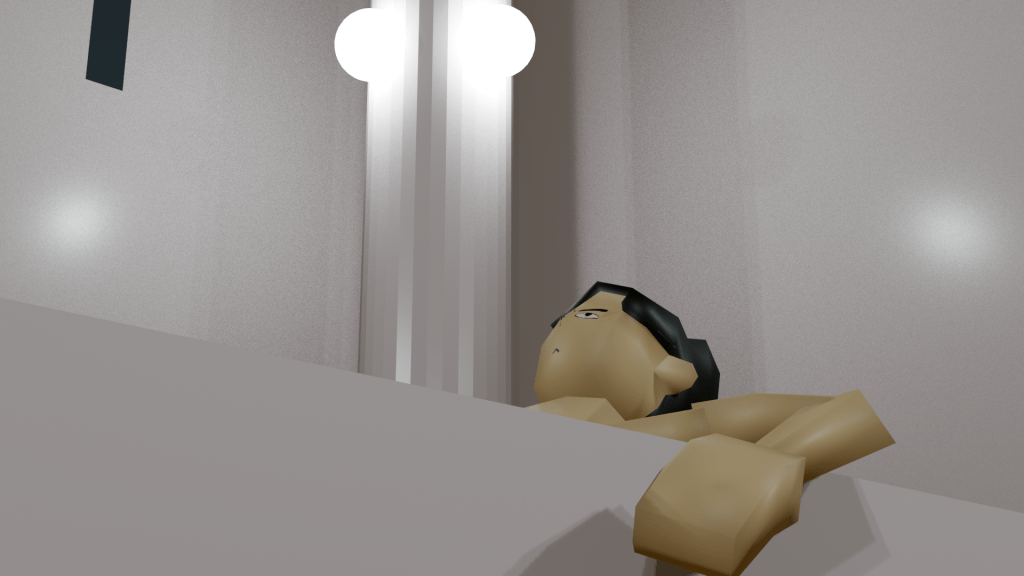
Helena lowered herself in the tub, enjoying the sensation of the warm water on her skin.
Through the narrow windows on the wall on her left she could see the sky, purplish in the dusk. Probably, during the day sunlight would enter from those and from the openings on the vaulted ceiling, illuminating the room. But at that hour of the evening such a duty was entrusted to the lamps mounted on the four columns holding up the roof. The phosphorae inside the globes absorbed the light during the day and released it at night. Helena knew that different kinds of phosporae emitted lights of different colors, and in this case that was an intense, almost cold white.
She was alone, in the rosy stone room. When Silen had led her inside the royal palace, he had offered her a bath before meeting Zamoshan, but much insistence had been needed from both her and captain Astor to let her bathe alone rather than with the help of the women that, apparently, had been “placed at her disposal as servants”. Security had not been the only reason for her refusal: Silen’s tone as he had said that… had put her off.
In the Principate, people were not “placed” at anyone’s “disposal”. Her grandfather had fought precisely against that mentality during the Liberation. And he had founded a nation where each and every human being was a free citizen, not a servant or a slave.
Her grandfather. Prince Aryst. Helena could count on the fingers of one hand the times she had met him, and yet in her memory she held a clear picture of that man, aged yet still standing tall and strong, slender, beardless, with short white hair, a kind smile and eyes full of melancholy. Her father, due to some reason he had never confided to her, had never gotten along with her grandfather, and their visits to Arlis had always been rare. From the scant few times Stefan had talked to her about him, Helena had drawn the picture of a harsh and cruel man, cold even toward his own children, an impression she struggled to reconcile with the gentle and doting old man, if perhaps a bit sad, that she found in her memories.
Despite being her daughter, Helena realized she knew very little about Stefan Arystid. She knew him, she knew his temperament, what he liked and what he disliked, his habits. But beyond that…
She knew he was the son of the Prince. She knew he had married a woman called Dora. She knew he had a brother, Sofron, and a sister, Dyna. She knew that Dyna had died, and that her death had been one of the causes of the Winter War. She knew he had fought in the Winter War, and she knew that at the end of the war he had been made exarch of Elis, a small town at the edge of the Principate, where she was born.
But all of this was little more than what any citizen could learn. And now that her father was gone, all the questions she could think of asking were destined to remain unanswered.
Sighing, Helena lifted herself from the tub and dried herself off carefully.
And as she did that, she took a decision.
She did not know when, but one day, before this story was over, she would go back to Arlis. On that day she would go to her grandfather and ask him to talk about her father, what kind of man he had been when he was young, and what had happened between the two of them.
As she moved to the bathroom’s antechamber, a smaller room still made of rosy stone, with a mirror, a stool and a small table, Helena noticed that her old clothes were gone. In their place, someone had put on the table new ones, neatly folded. She figured out they had to be a gift from her hosts: a short light green tunic, with two pockets; tight-fitting pants, very weird for someone like her, used to the loose ones they had in the Principate; and a pair of dark boots, that she was surprised to find very comfortable.
All in all, they seemed to be sturdy and resistant, better suited for traveling than the clothes she had worn up to that point, and she was sincerely grateful for them. She also noticed the similarity with those Silen and the other denizens of Istak were wearing, and she realized this must be the local fashion.
But even if a part of her felt sad for the loss of one small bond with her home, as she knocked on the door to signal Astor that she had finished she found herself reciting under her breath a very ancient proverb: «When in Rome, do as the Romans do.»
Where “Rome” was and who the “Romans” were was something lost to the abyss of time, but the meaning was “When you travel, act like the inhabitants of the place you find yourself in.”
And in her situation, she considered it a very wise advice.
 Saiai Webnovels
Leave a comment