«Citizens of Elis.» Helena said to the gathered crowd, about one hour after the trial.
She took a deep breath. She would have rested, but her father had insisted for her to be the one giving the announcement. She noticed that the crowd’s eyes were focused less on her and more on her father, who sat on a chair behind her. The emotions she read in those eyes went from vague apprehension to a hope that defied belief.
«I know you are confused and worried, and so I am happy to give you good tidings. After a long convalescence, Exarch Stefan is fine again!»
As the crowd erupted in an exultant roar, her father rose from his chair and spread his arms, holding the hands up.
Helena looked at him. He was still as pale as when he had been laying on the bed, even his eyes were still sunken, but now there was no trace of pain in his smile.
I should be glad. It has to be a sign that he is healing. And yet…
She looked back at the crowd. The words came out effortlessly, betraying none of her thoughts. It was a technique she had long perfected in many years of practice.
«Now we can resume our journey!»
The citizens’ reaction was far less exultant. Some exchanged worried looks, others kept their eyes on her, awaiting futher details.
They probably do not even know where we are, Helena thought, annoyed. She did not hate the people, not in the least. But neither did she love them like her father did.
Stefan Arystid lived for the people, his one wish in life was to protect the citizens and grant them happiness. His plan to reform the Principate itself was born out of his sincere desire to guarantee the freedom and well-being of the people.
Helena was not like him: such things left her indifferent. The usefulness of “showing” love, care, worry for the great mass of people her father was responsible for had always been clear to her, and she had learned to act as if she really felt those emotions. But it was all indeed a show, a mask that luckily she managed to wear without discomfort.
She wondered what words to employ.
«Our destination is the city of Istak, to the east. There we will wait for news from our allies.»
She opted not to mention Dysis. It was not the time yet.
A woman in the crowd asked: «When can we go back home?»
Helena responded promptly, as she had readied herself to do: «I will not lie to you. I cannot answer this question. Now that Sofron Arystid has bared out his ambition and violated the very harmony of the Principate, it is clear we will be able to go back to Elis only after he is defeated. What I can promise you is that his defeat is certain. I know not when we will go back home, Citizens, but I know that we will!»
As approving cries rose from the crowd, Helena tried glancing for a moment at her father. He nodded, smiling. That was everything she needed.
A male voice said: «Istak is in the Three Kingdoms though! Aren’t they enemies?»
The entire crowd shook as if a wave had passed over them. Helena understood she had to react fast.
«No, they are not.» Quick and to the point. «The Long truce has lasted for an entire generation by now, we can consider ourselves, to all intents and purposes, in peace.» Concise explanation. What else can I say… oh, right! «And in order for our relationship with them to not sour, I have to demand that you do not use the expression “Three Kingdoms” as long as we are their guests. The denizens of this nation call it the Zanvervek Federation.»
She saw confusion spread on the people’s faces, and silently sighed. She was certain enough that most of them had never heard that name, but she could do nothing about it at this point.
«From now on, call it “the Federation”, as a sign of good will. That is all.» she finished, preventing further questions. «Go back to your tents and follow the watchers’ orders. Our journey will be long, but before two weeks have passed we will find asylum and rest from our labors. Have hope.»
Yes, they all needed to have hope. She and her father first and foremost.
Se was not certain, at all, that they’d find asylum in Istak, but it would have been useless to say that out loud. For the undeniable truth was that they had no other option.
They split into groups, one for each tent. Th watchers assigned to each group started dismantling their respective tent.
«Time to make yourself useful, deserter.» said his decarch, a relatively young man, strongly built and with a thick reddish beard.
«Yes. Just tell me what I have to do.» Elef answered.
The decarch looked at him as if that weren’t the answer he expected, but after the momentary surprise he replied: «Start by removing the ropes around the tent’s cover. You should be able to do it even with just one arm.» he snickered, before immediately turning serious again. «And once you’re done come back to me. Don’t think your workload will be lessened out of concern for you!»
Elef didn’t think that. But it didn’t matter. Whatever they asked him to do, he’d do it. The decarch he once had been would have acted the same way with the grunt he was now.
The dark cylinder surmounted by a cone that was the tent was impressive, seen up close. It was large enough for about twenty people, so it was hard to imagine it could be disassembled and transported with relative ease.
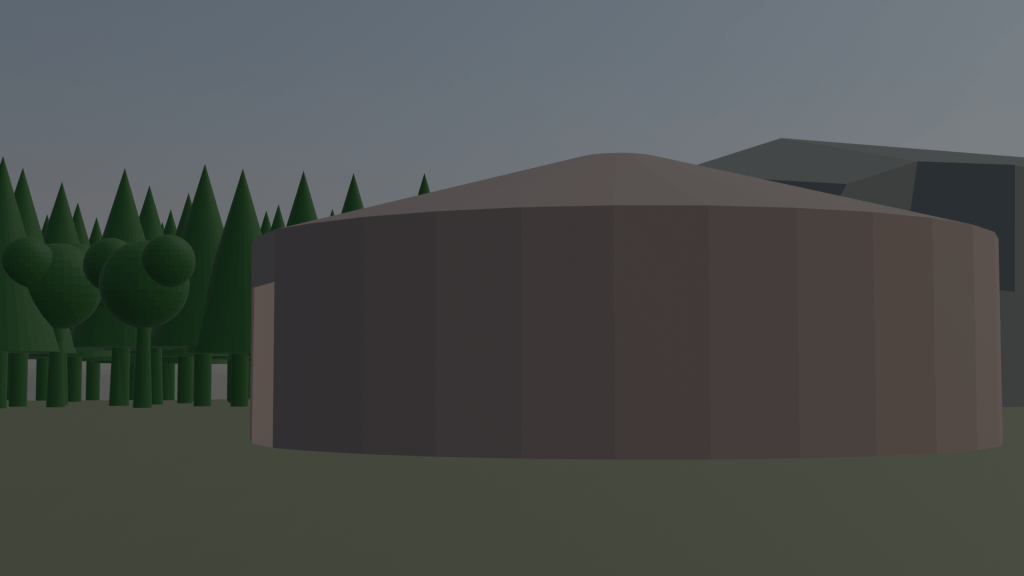
He put himself to work untying the ropes that held the leather covering in place over the underlying frame. And he found out that despite his decarch’s prediction he was unable to do it with just one arm. Maybe he might have been able to, if the injured arm hadn’t been his dominant one. Gritting his teeth, he cautiously extended his left hand to help his right, that didn’t have enough dexterity even for such simple knots.
He felt like an idiot, but there was nothing he could do aboit it.
«Want a hand?» an unfamiliar female voice.
Elef turned and saw one of his companions. A rather small girl, with short dark hair and light eyes.
«I can help.» she insisted, showing him a big smile.
«I don’t need it.» was his immediate rude answer. As as if he were trying to demonstrate it, right at that moment he untied the knot he was working on.
«As you wish.» the girl said, then she left. But Elef had the impression she had been convinced more by his actions than by his words.
After loosening the other knots, he wound back the ropes and put them on the ground. He stood watching as his companions removed the tent’s covering, one large rectangle of leather after the other, starting from the top, until the underlying wooden frame was laid bare: a circular net, and above it thin beams connected like spokes to a central wheel, held up by a single solid pillar.
It was indeed just like a larger version of the tents he watched the shepherds set up in the summer, when they came down to the valley with their flocks. Between the shepherds and the farmers there was a silent pact, not so different from the Long Truce come to think about it, according to which each group had its own territory and neither crossed into the others in their activities. This way, each year the shepherds had their pastures, and the farmers didn’t have to fear having their fields ruined by the animals.
Elef was taken by a sudden feeling of nostalgia, and stopped delving into his memories. Back to the present, he saw that his companions were rolling up the leather, then tying the rolls up two by two. In the meantime, his decarch was giving instructions to the citizens: «The jars and heavier containers will be in the watcher’s care, but each of you will be responsible for their own cot! Take yours and follow me.»
Someone put something heavy to Elef’s feet. «This is yours to carry.» he told him.
Elef lowered his gaze and saw a large travel bag, with strings to hold it on one’s back. It seemed overly full, and someone had tied on it not one, not two but three leather bundles.
«Is there a problem, deserter?» said the man who had spoken to him before.
Elef grabbed one of the strings, and without looking up at him he said: «No, none at all.»
He patiently lifted the bag up to his back, realizing it was even heavier than it seemed, but he raised no complaint. Once he managed to stand back up, the one who had given him his burden had left. Looking around, Elef realized they must have given the signal to depart. He joined the column of marching citizens and watchers, as he tried to not focus on the weight on his shoulders or on the pain it was causing him.
The guards positioned themselves on the outside of the column, forming a shell around the citizens. The man Elef found himself to walk alongside didn’t seem very willing to talk. Whether this was something to be grateful for or not, he couldn’t say. It was only after they left the ruins and took the road east that the young man recognized his traveling partner.
«Artor! What are you doing here?»
«This is the tent I was assigned to.» His tone was the same as always, the one that got on Elef’s nerves: detached and with a tinge of annoyance, as if he were being forced to state the obvious. The bruises on his face were healing. Elef noticed he was carrying two folded-up cots, one under either arm.
«Listen, I don’t want to argue with you right now.»
«The feeling is mutual.»
Elef suppressed the urge to scream at him. He couldn’t believe this was the same person who had spoken in his defense a few hours earlier. And as he formulated that thought, he realized there was something he had to tell him.
«Well… thank you, anyway.»
«For what?»
«What do you mean “for what”? For what you did at the trial. I don’t know why you did that, but-»
«Kal asked me.» Artor interrupted him.
«Kal… Kalos asked you? You did it just for that?»
«No. Fyra asked me too. In her own way.»
That last answer shocked him so much that he almost forgot what they were talking about. Fyra? That arrogant imbecile doing something for me? Doesn’t she hate me?
After a brief pause, Artor continued: «They were worried about you, Elef. Both of them. Despite everything, they still consider you their friend.»
Elef couldn’t help but sniff a little. It had been many years since the last time he thought about his childhood. His life before he entered the Watch, thinking only about working his way up as soon as possible, even before his parents put him to work in their farm. When he was just a child, playing with other children. He took the decisions, and Fyra always argued with them, but even when they couldn’t find an agreement there was never any ill will. Unlike Fyra, little Kal always did everything he told him, so he had to be careful not to put him in danger: that kid would have rather gotten hurt than say no, and when they played together he was Elef’s responsibility. Then there was Agatha, who spoke little and tended to be afraid of him. And there was Mak, who always had the most fun ideas… Elef preferred to not dwell on Makar. It still hurt too much.
And finally there was… him.
«They still consider me their friend, huh?» said Elef, curving his mouth in a melancholic smile, before gathering his courage and asking Artor: «…And what about you?»
His answer was chilling: «I thought I had told you already: I was never your friend.»
Elef had to wrestle with his anger again: «Then why? Why did you help me? Just because two people who are your friends asked you to?»
He didn’t understand. Artor hadn’t always been like this. He tried to remember the moment things had changed, the moment his friend Ark became the cowardly daddy’s boy he couldn’t stand, but he realized he was unable to.
Something had happened, though. At some point, Ark had stopped leaving his house, stopped playing with them. If only he could remember…
«I think you misunderstood.» Artor’s voice interrupted his reminiscence, just as he felt he had almost got his answer.
«None of you is my friend.» he continued. «I have no friends. I never had any friends.»
Before Elef could ask him: “What on Earth do you mean?” a third voice drew both men’s attention.
«Artor, faster! You’re lagging behind!»
Out of the column of people emerged a thin woman, with a fidgety air about her and, as Elef immediately noticed, unburdened by any luggage, unlike everyone else. «My word, I always have to come get you, you good-for-nothing! Come on, come with me.»
«Yes, Mother.» were Artor’s last words, then he and the woman disappeared walking forward through the flow of people.
For some time, there was silence around Elef as the group kept marching on.
At some point he thought he saw a glimpse of his parents among the crowd. But then their figures disappeared as quickly as they had appeared. Better this way. He had no intention of meeting with them. Not yet.
Then, for the second time that day, he heard the question: «Want a hand?»
The one who asked it was the same girl from before.
«My bag is only half full. We can share the load.» she said, making a gesture with her head toward her back.
«I don’t need it.» he answered her, like he had done before.
But this time the girl didn’t leave.
«Are you sure?» she asked, with the tone of someone who already knows the answer.
Elef was not sure. He was starting to feel tired, and now that Artor had left there was nothing to distract him from the pain. But he couldn’t give up.
«This is my punishment. If you don’t let me endure it, you’ll make things worse and you’ll become a target as well.»
«Alright.» she finished, apparently convinced by his words. Still, she didn’t leave as she had done before.
«It sure does look heavy.» she said instead. «I once heard of a man who used sklerygron to carry items. He turned his wristband into a box, filled it with stuff and then made it float behind him. Isn’t it crazy? I never saw it, I don’t even know if it’s true, but sometimes I think I’d like to have such a power. Still, that would mean being unable to use my sword, so there would be drawbacks. Hmmm, sacrifice my fighting ability in order to never have to toil again, do you think it’s a fair exchange? I mean, I think it depends on your occupation, in the end. If I were a traveling merchant, for example…»
Elef didn’t interrupt her. He listened to her, without answering. And she gave no sign of really wanting him to answer.
«Oh, right.» said the girl eventually. «I’m Mikka. I was given this name because I was a premature birth.»
At this point it would have been impolite to not introduce himself.
«Eleutar.»
«I heard. An important name! I like it.» she answered, smiling.
Elef smiled in turn. This would be a long and difficult journey. But now, at least, he had to admit he felt less lonely.
The citizens of Elis (perhaps it would have been better to call them “refugees” at this point) reached the boundary of the forest at sunset.
The watchers assigned to Fyra’s group began methodically setting up the tent for the night, but she paid no attention to them. Her eyes were focused on the great plain she could see in the distance where the trees thinned out, bathed in the low light coming from behind her. The sky had cleared during their march, and now it had a soothing rosy hue.
She watched it pass from rosy to red to purple as the trees’ shadows stretched out, and when they finally called her, as night fell, she saw the Red Moon rise. She felt as if an eternity had passed since the last time she had seen it.
Inside the tent, there appeared to be some kind of event. Everyone was gathered around a tall and strongly built man, with a short beard that needed some cutting. Fyra recognized Kydalim, who lived on the same street as her: the nephew of the woman they had saved. In front of him, in a row, there was a large group of children. Some were his many sons and daughters, but there were others as well.
«You promised us, Dad!» one of the kids exclaimed. «We heard that name today! Who is Daskal? Tell us his story!»
Kydalim smiled. «Fine, fine. Everyone sit down. It seems you’re not the only ones interested.» He moved his gaze to the small crowd around him, while the children complied with his request.
Fyra was convinced that everyone beside the children knew the story already, but she also thought that even a known story would be a nice pastime, and joined the crowd.
Once everyone had sat down, Kydalim cleared his throat and said, bringing a hand to his ear: «So… could you repeat the name? I didn’t hear it very well.»
«Daskal!» shouted one of the kids.
«Perfect!» Kydalim replied. «However, if I remember correctly there was a phrase that went together with that name, today. Does some of you remember that?»
The children murmured among each other for a while, then one said: «Our Teacher! His name says so as well!»
«Very good! And you know what a teacher does, don’t you? A teacher…»
«Teaches!» all children said together.
«That’s right. Daskal was a teacher. The teacher of all of us. Many, many, many years ago, he taught us the language we speak and the laws we follow today.»
The kids made a “Oooohhh”.
«And do you want to know something incredible?» Kydalim leaned toward them. «When he started he was a mere child, just like you!»
When the second “Ooooohhh” died down like the first, he continued: «Indeed. They were all children. Daskal led them far, far away, to a place they could call “home”. And together with them, he founded what we today call the Principate of Antrakhora, our great nation!»
Kydalim continued his tale: he talked of the children’s journey, of the many dangers they met with and of the many trials they overcame. It was a simplified version of the tale, that took ample license and was appropriate for such a young audience, but it was still a pleasure to listen to.
He told it like one big adventure, instead of a desperate struggle, a flight from the violence that had taken the young protagonists’ parents away. And it was fine like that. The children listened to it raptly: they laughed when Daskal and his friend Aryst challenged each other to a fishing match and both ended up falling in the water; they were moved almost to tears when Nyssa got lost in the woods and it was Krys who found her and brought her back; they held their breath when the group met an older boy, unknown and nameless, and sighed in relief when Daskal made friends with him and decided to give him a name himself: “Andor”.
«I remember this part way different!» said someone among the adults, in a mocking tone.
«Shut up, Pol.» Kydalim answered firmly, then he resumed the tale as if nothing happened: «Andor was the first, but after him all the other children asked Daskal to give them a name. And he obliged, using the tongue he had taught them.»
A little girl interrupted him: «So until now none of the children had a name?»
«Precisely. I used them to make it easier for you to follow, but it was only after the encounter with Andor that all of them gained their names: Aryst, “the best”. Kallista, “the most beautiful”. Nyssa, “Snow”. Krys, “Gold”. And so on. And he himself was given a name, decided on by all the others: Daskal, “Teacher”.»
Another kid, a little older than the others, asked: «Daskal was our first Prince then?»
«Oh no, no no. Aryst became Prince, many years after the events I am telling. Daskal never was Prince, only Teacher.»
A third child, a girl, replied with the question all parents learn to dread: «Why?»
For the first time that evening, words appeared to fail Kydalim.
But before he could manage an answer, the adult from before spoke again, with the same tone as before: «Yeah, I wonder why!»
«Pol, please.» Said Kydalim, barely hiding his annoyance.
Fyra understood his hesitation: that tale was not suitable for children.
Fortunately, the attention of children is always fleeting. Seeing he wasn’t answering their question, one of them asked: «But in the end, did Daskal really exist? Isn’t he only a legend?»
Kydalim immediately took advantage of that chance. «Of course he existed! And not only that. Among us there still are people who met him in the flesh! Didn’t you?»
He moved his gaze to a corner of the tent, where the old aunt was sitting, the elderly lady Fyra had saved together with Kal and the others.
The woman nodded emphatically, with a large smile.
Looking then to the other side, and making sure his audience followed him, Kydalim brought his attention to two other elderly people. And Fyra’s grandparents nodded like the old aunt.
«What I have told you today is not a fairy tale, children. It’s a real story.» With one final look at his listeners, some of which were falling asleep, Kydalim finished: «It’s getting late, and I’ve spoken enough for tonight. I’ll continue another day, maybe. What do you say?»
The answer was in drowsy murmurs. The older kids wanted to continue, but their mothers took it upon themselves to dissuade them, telling them that tomorrow would be a long day.
Fyra too went to sleep, and that night she thought of everything that had happened in these last few days. Despite the situation they were in, that night she had felt like a kid again, as if she were once again listening to her grandparents’ tales.
A smile formed on her lips. She didn’t usually let herself get sentimental, but just this once she made an exception.
 Saiai Webnovels
Leave a comment